How to Get More Customers for Salons
Salon owners don't have a marketing problem so much as a memory problem: the client who loved her cut in March and never came back is the growth strategy hiding in plain sight.
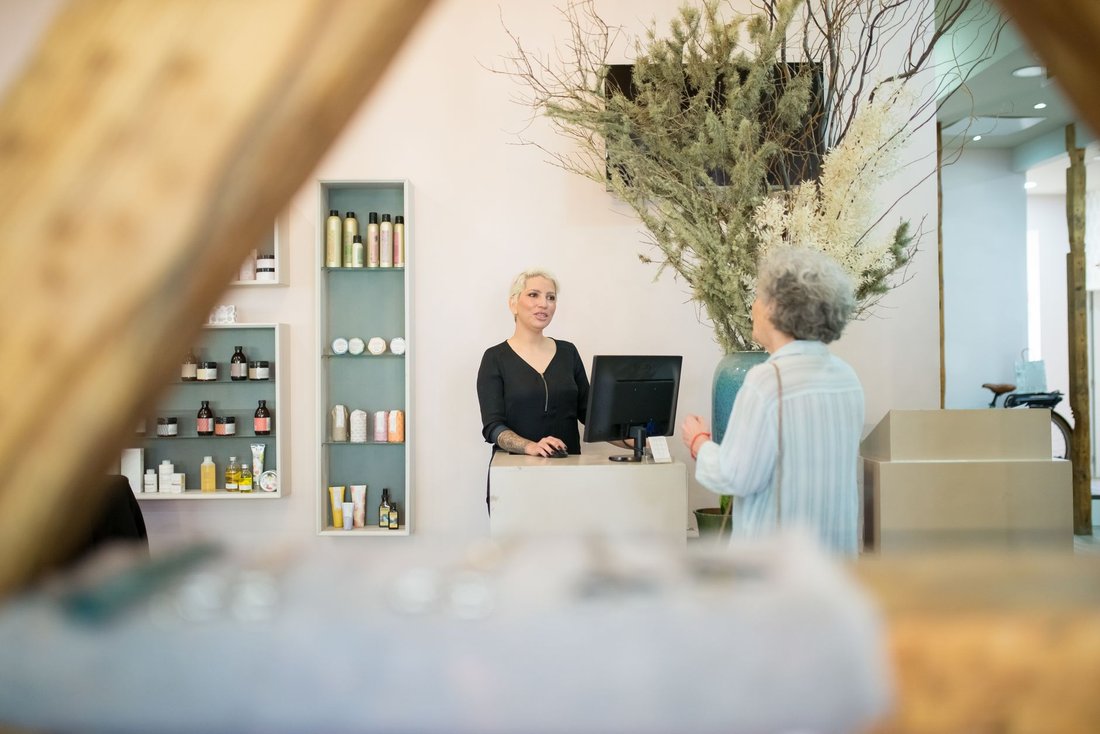
The chair sits empty at 2 p.m. on a Tuesday, and the stylist who filled it is scrolling her phone, not because business is bad exactly, but because it's unpredictable in a way that makes payroll a monthly guessing game. Meanwhile there's a client list sitting in the booking software with four hundred names, most of whom haven't been back in six months, and nobody has called a single one of them. That gap between the empty chair and the dormant client list is where most salons lose money, and closing it is the real answer to how to get more customers for salons, not another round of boosted Instagram posts.
Salon owners tend to treat customer acquisition as an advertising problem. It isn't, not primarily. A salon's real growth engine is retention and referral, because a happy client is worth several visits a year for years, and every one of those visits carries the chance of a referral if the owner actually asks for it. New-customer ads matter, but they're expensive per booking compared to the cost of reactivating someone who already trusts the place enough to have sat in the chair once.
Why rebooking at checkout beats any ad campaign
The single highest-leverage move in the entire business is asking every client to book their next appointment before they leave the chair. Not "call us when you're ready" — an actual date on the calendar, six or eight weeks out, with a card on file so a no-show costs something. Salons that make this the default policy, not an occasional suggestion, routinely fill more of the calendar automatically than any promotion could manage. It works because the client is standing there already pleased with the result, which is the exact moment she's most likely to commit.
Train every stylist to ask the same way, every time: "Let's get you back on the books before things fill up." Not optional, not left to the front desk to remember. If the front desk system makes rebooking annoying, that's a real cost, and it's worth fixing before spending a dollar on ads.
How to get more customers for salons by working the list you already have
Pull the client list and sort by last-visit date. Anyone past ninety days without a booking is lapsed, and lapsed doesn't mean lost, it means neglected. A short, personal-sounding text or email — "We miss you, here's fifteen percent off your next color" — brings back a meaningful share of people who simply drifted, not because they were unhappy but because life got busy and nobody reminded them. This single list-mining exercise is often the fastest way to answer how to get more customers for salons without spending anything on new-customer acquisition at all.
Segment further if the software allows it: color clients on one cadence, cut-only clients on another, clients who bought a package that's about to expire flagged separately so they don't just let the balance evaporate.
Referrals need mechanics, not just goodwill
Clients tell friends about a good haircut constantly, in casual conversation, without any prompting. The problem is that goodwill alone rarely turns into a booking, because the friend forgets the name of the place or doesn't know who to ask for. Give clients something concrete to hand over: a referral card with the salon's name and a specific stylist, or a simple "bring a friend, you both get a discount on your next visit" offer stated out loud at checkout. Structure beats sentiment here. A referral program with a clear reward, tracked by asking new clients "who sent you," turns word of mouth from a hope into a repeatable channel.
- Ask at checkout, not through a follow-up email nobody opens
- Give a reason to redeem now, like a discount tied to the next visit for both people
- Track the source in the booking system so the reward actually gets honored
Google Business Profile is the front door now
Someone searching "haircut near me" or the salon's actual name is going to land on a Google Business Profile before they land on a website, and what they see there decides whether they call. Photos should be recent and actually taken in the salon, not stock images. Hours need to be accurate, especially around holidays, because nothing kills a first impression like driving to a salon that's closed when the listing says open. Respond to every review, good or bad, because a thoughtful reply to a three-star review often reassures a hesitant browser more than five glowing ones with no owner response at all. This is also where a salon starts to show up in local search results instead of getting buried under three competitors with more recent activity.
Make review generation part of the checkout flow
Don't wait for reviews to happen on their own. Ask satisfied clients directly, in person, right after the service, while the compliment is still fresh: "If you loved it, a Google review really helps us." Follow with a text link the same day, because next week she won't remember to do it. Front desk staff should have this as a standing habit, not a once-a-month campaign.
Social proof that isn't just another selfie
Before-and-after photos work because they show the actual transformation a stranger is paying for, not because they're pretty. Post them consistently, tag the stylist who did the work, and get written permission from the client first. A steady stream of real transformations builds more trust over a few months than any single viral post, and it gives potential clients a way to picture themselves in the chair. Pair this with basic a simple content routine so the posting doesn't rely on inspiration striking at random.
None of this requires a marketing budget most independent salons don't have. It requires a front desk that asks for the rebooking every single time, a list of lapsed clients that actually gets called, a referral offer with real mechanics behind it, and a Google profile that looks alive. Pick one of those four and fix it this week. The chair at 2 p.m. on Tuesday will start filling itself.
Lawsuit or bad press outranking your business?
Knownly publishes truthful, search-optimized content across high-authority sites to push negative results off page one — done for you.
See how Knownly works →